


Income requirements shape the path to homeownership in Virginia. Affordability determines who can buy, where they can buy, and how much financial pressure they will carry after closing.
Careful budgeting and income planning remain critical as housing prices continue to outpace wage growth across much of the state.
Six-figure salaries have become increasingly common among households purchasing a median-priced home.
Rising property values combined with elevated mortgage rates have pushed required earnings higher than many buyers expect.
Many affordability calculations assume a 10% down payment and total housing costs at or below 30% of gross income.
Buyers who exceed that threshold often face financial strain, especially when factoring in taxes, insurance, and maintenance.
Planning requires a clear picture of current market pricing and realistic income expectations.
Current Housing Market in Virginia
Virginia’s median home sale price sits around $419,000 based on late 2025 data. Early 2026 reports place the statewide median closer to $427,600.
Price growth has slowed compared to peak pandemic years, yet overall values remain high relative to long-term historical averages.
- Median sale price near $419,000 in late 2025
- Median approaching $427,600 in early 2026
- Continued pressure on affordability despite slower appreciation

Regional variation remains significant across the Commonwealth. Alexandria and Arlington frequently report median prices exceeding $575,000 to $615,000 or more.
Certain neighborhoods and newer construction properties push far above those figures, especially in areas close to major employment centers.
Richmond maintains a median price near $360,000, offering a lower entry point compared to Northern Virginia.
Roanoke remains more affordable at approximately $279,950, though rising mortgage rates have reduced purchasing power even at that level.
- Alexandria and Arlington often exceed $575,000 to $615,000+
- Richmond averages near $360,000
- Roanoke averages around $279,950
Market conditions also vary by property type. Single-family detached homes consistently command higher prices than condos or townhomes.
Buyers seeking detached homes face tighter inventory and stronger competition in many metro areas.
Limited supply in higher-demand regions continues to support elevated prices and restrict downward pressure on values.
Regional Differences Matter
Northern Virginia markets, including Arlington, Alexandria, and Fairfax County, rank among the most expensive in the state.
Proximity to Washington, D.C., concentration of federal and private-sector employment, and sustained demand contribute to persistent pricing pressure.
Detached homes in certain counties frequently approach or exceed $1 million, raising the bar for entry into homeownership.
Central and southwestern regions offer lower purchase prices, yet affordability has tightened there as well. Income requirements shift dramatically based on location alone.
Buyers relocating within Virginia often encounter substantial differences in qualifying income tied directly to regional home values and tax structures.
Factors Affecting Income Requirements

Multiple financial variables influence how much income a household must earn to purchase a home.
Ongoing homeownership costs can include routine servicing and unexpected repairs, making it important to budget for professionals such as a licensed plumber when evaluating long-term affordability.
But that is not all, not even close.
Mortgage Interest Rates
Mortgage rates directly impact monthly payments.
Elevated rates increase principal and interest obligations, raising the income needed to qualify under standard debt-to-income guidelines.
Even modest rate shifts can produce noticeable payment differences.
Higher rates reduce purchasing power, which means buyers qualify for smaller loan amounts unless income rises proportionally.
Down Payment Size
The down payment amount significantly shapes affordability. Buyers contributing 20% instead of 10% reduce loan balances and often lower required income.
- Reduced monthly principal and interest payments
- Potential elimination of private mortgage insurance
- Improved debt-to-income ratios during underwriting
Households able to save more upfront may gain greater flexibility when selecting price ranges.
Household Debt and Credit
Debt-to-income ratios remain central to loan approval decisions.
Lenders evaluate recurring obligations such as student loans, car payments, and credit card balances.
Higher existing debt increases the required income for mortgage qualification.
Credit profile also affects borrowing costs. Strong credit can secure lower interest rates and more favorable loan terms.
Weaker credit may increase monthly payments and raise income thresholds needed to qualify.
Income Needed to Buy a Home in Virginia
Housing prices translate directly into income thresholds.
Affordability calculations typically assume a 10% down payment and total housing costs at or below 30% of gross income.
Northern Virginia
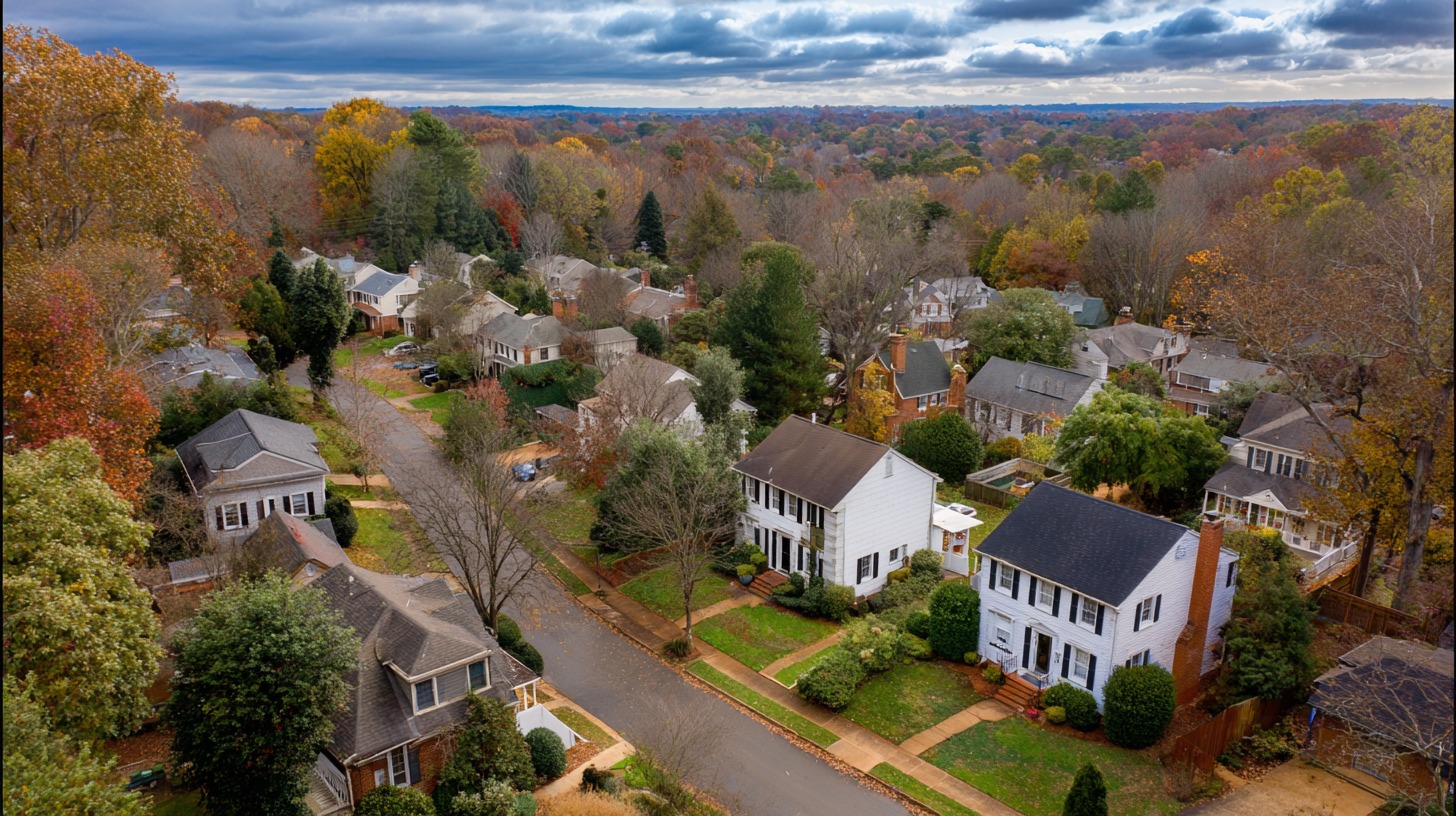
Experts estimate that roughly $300,000 in annual household income may be required to afford a typical single-family detached home in much of Northern Virginia.
The estimate aligns with home prices that frequently approach or exceed $1 million in certain counties.
- Large loan balances tied to high purchase prices
- Elevated monthly principal and interest payments
- Property taxes and insurance costs that rise with home value
Reports indicate that average local incomes remain less than half of what is required to comfortably purchase many detached homes in high-demand areas.
The gap between wages and housing costs continues to widen, limiting access for middle-income households.
Condos and townhomes may offer lower purchase prices, yet prime neighborhoods often still require substantial six-figure incomes.
Buyers earning under $200,000 annually may find options limited in competitive Northern Virginia submarkets.
Other Regions in Virginia
Statewide median pricing around $419,000 suggests that buyers in many regions still need well over $100,000 in annual household income to meet the traditional 30% housing cost rule.
Mortgage rates significantly influence that calculation, particularly for buyers financing the majority of the purchase price.
- Richmond, with a median near $360,000, often requires solid six-figure earnings
- Roanoke, with median pricing around $279,950, presents a lower barrier but still demands higher income than historic norms
Affordability challenges persist across most metro areas.
Elevated borrowing costs amplify monthly payments even in cities where median home values appear moderate compared to Northern Virginia.
Virginia Housing Programs and Income Limits
State assistance programs aim to support buyers who meet established income thresholds. Virginia Housing sets caps that vary by region and program structure.
Virginia Housing Loan Income Caps for FY26
Income limits for Washington, Arlington, and Alexandria reflect the higher cost environment in Northern Virginia.
Standard caps range roughly between $148,000 and $174,000. Expanded programs extend eligibility up to approximately $245,000.
- Standard limits between $96,000 and $110,000
- Expanded program caps up to about $175,000
Hampton Roads markets including Norfolk, Virginia Beach, and Newport News follow similar structures. Standard limits range around $97,000 to $113,000, while expanded programs extend roughly between $121,000 and $141,000.
- Standard limits near $90,000 to $103,000
- Expanded caps generally between $112,000 and $129,000
Interpretation
Income caps determine eligibility for first-time buyer loans and related assistance. Households earning above those limits may not qualify for subsidized financing.
High-cost regions present a difficult contrast.
Expanded caps up to $245,000 in Northern Virginia may still fall short of income levels required to comfortably afford a median-priced detached home approaching $1 million.
Assistance programs can help moderate-income buyers reduce upfront costs or secure favorable loan terms, yet they may not fully close affordability gaps in expensive metro areas.
@teamspanbergerAs Governor, Abigail Spanberger will work to lower housing costs in Virginia.♬ original sound – Team Spanberger
The Bottom Line
Income requirements in Virginia vary dramatically by region.
Roughly $300,000 in annual household income may be necessary to purchase a single-family detached home in much of Northern Virginia under common affordability assumptions.
Other regions of the state typically require six-figure incomes that often exceed $100,000, especially when following the 30% housing cost rule with a 10% down payment.